The Secret Behind Your Favorite Vanilla Treats
Vanilla has been a beloved flavor for centuries, known for its rich, sweet aroma that enhances everything from baked goods to desserts. But have you ever wondered where the vanilla in your favorite treats actually comes from? It turns out, the answer might not be as simple as you think.
A Brief History of Vanilla

Vanilla originates from the vanilla orchid, a climbing plant native to the jungles of Mexico and Belize. The Totonac people, who lived in what is now the Mexican state of Veracruz, were among the first to cultivate and harvest vanilla. They believed the orchid grew from the blood of a deity and her mortal lover, adding a mythic touch to this precious spice.
Over time, vanilla spread across the globe, becoming a highly sought-after ingredient. The Aztecs used it in their chocolate drinks, while the Spanish took it back to Europe, where it quickly became a luxury item. Today, vanilla is still one of the most popular flavorings, found in everything from ice cream to perfumes.
The Real Deal vs. Imitation Vanilla

Despite its popularity, there’s a big problem with vanilla: supply can’t keep up with demand. Pure vanilla extract is made by soaking vanilla beans in alcohol, but only about 1% of the vanilla flavoring consumed worldwide comes from real vanilla beans. The rest is made from synthetic compounds.
This means that when you bite into a vanilla-flavored cookie or sip on a vanilla latte, you’re likely tasting artificial vanilla rather than the real thing. So, what exactly goes into imitation vanilla?
How Imitation Vanilla Is Made
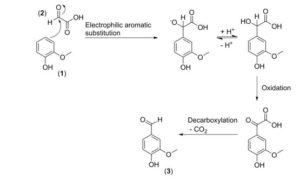
The key ingredient in artificial vanilla is vanillin, a compound that gives vanilla its signature flavor. Scientists first isolated vanillin in the 1800s, and later, they discovered how to synthesize it in the lab. Today, most vanillin is made from guaiacol, a chemical derived from petrochemicals. You might have seen guaiacol in charred firewood, where it forms black creosote.
Other sources of vanillin include lignin from wood pulp, clove oil, and even cow manure. These materials are processed and combined with other ingredients like caramel coloring and alcohol to create a substance that mimics the taste of real vanilla.
The Beaver Connection

Here’s an interesting twist: some imitation vanilla flavoring may contain castoreum, a substance produced by beavers. Castoreum is secreted from glands near a beaver’s anus and has a sweet, vanilla-like scent. Though it’s used in small amounts in some food products, it’s not common in the U.S. market.
The FDA classifies castoreum as “generally recognized as safe,” so manufacturers can list it as a “natural ingredient” without revealing its origin. However, since it’s rare and expensive, it’s not widely used in commercial vanilla flavoring.
Environmental Concerns

While imitation vanilla is affordable and widely available, it’s not without its drawbacks. The production of synthetic vanillin involves chemicals that can pollute waterways and require costly waste treatment. Additionally, the catalysts used in manufacturing are often single-use, contributing to environmental waste.
As demand for vanilla continues to grow, finding sustainable alternatives remains a challenge for the food industry.
Final Thoughts
So, the next time you enjoy a vanilla treat, take a moment to appreciate the complex journey behind that familiar flavor. Whether it’s real vanilla, synthetic vanillin, or even a hint of castoreum, the story of vanilla is as rich and layered as the flavor itself.