Japan Introduces Significant Tax Increases for Overseas Travelers
The Japanese government has announced plans to significantly increase taxes levied on all overseas travelers, including South Koreans, starting from July of next year. Additionally, new entry inspection fees are expected to be introduced in the future, according to recent reports. As the Takahashi Cabinet prepares the largest-ever budget for next year and national debt has grown to an unsustainable level, analysts suggest that the government is ultimately seeking to cover the shortfall by imposing charges on tourists.
According to the report, the Japanese government has finalized plans to raise the existing departure tax, officially called the “International Tourist Tax,” from 1,000 yen (approximately 9,000 Korean won) per person to 3,000 yen (approximately 27,000 Korean won) starting from July of next year. The policy was decided in a meeting the previous day, and the government anticipates that revenue for the 2026 fiscal year (April 2026–March 2027) will increase 2.7-fold to 130 billion yen (approximately 1.2 trillion Korean won) compared to the previous year.
The official name of the tax commonly referred to as the “departure tax” is the “International Tourist Tax.” Introduced as a national tax on January 7, 2019, it is levied on all individuals aged two or older departing Japan by air or sea, regardless of nationality. The tax is automatically added when purchasing tickets. Crew members and transit passengers leaving within 24 hours of arrival are exempt. The Japanese government has stated that the revenue will be used for improving travel infrastructure and promoting regional tourism resources.
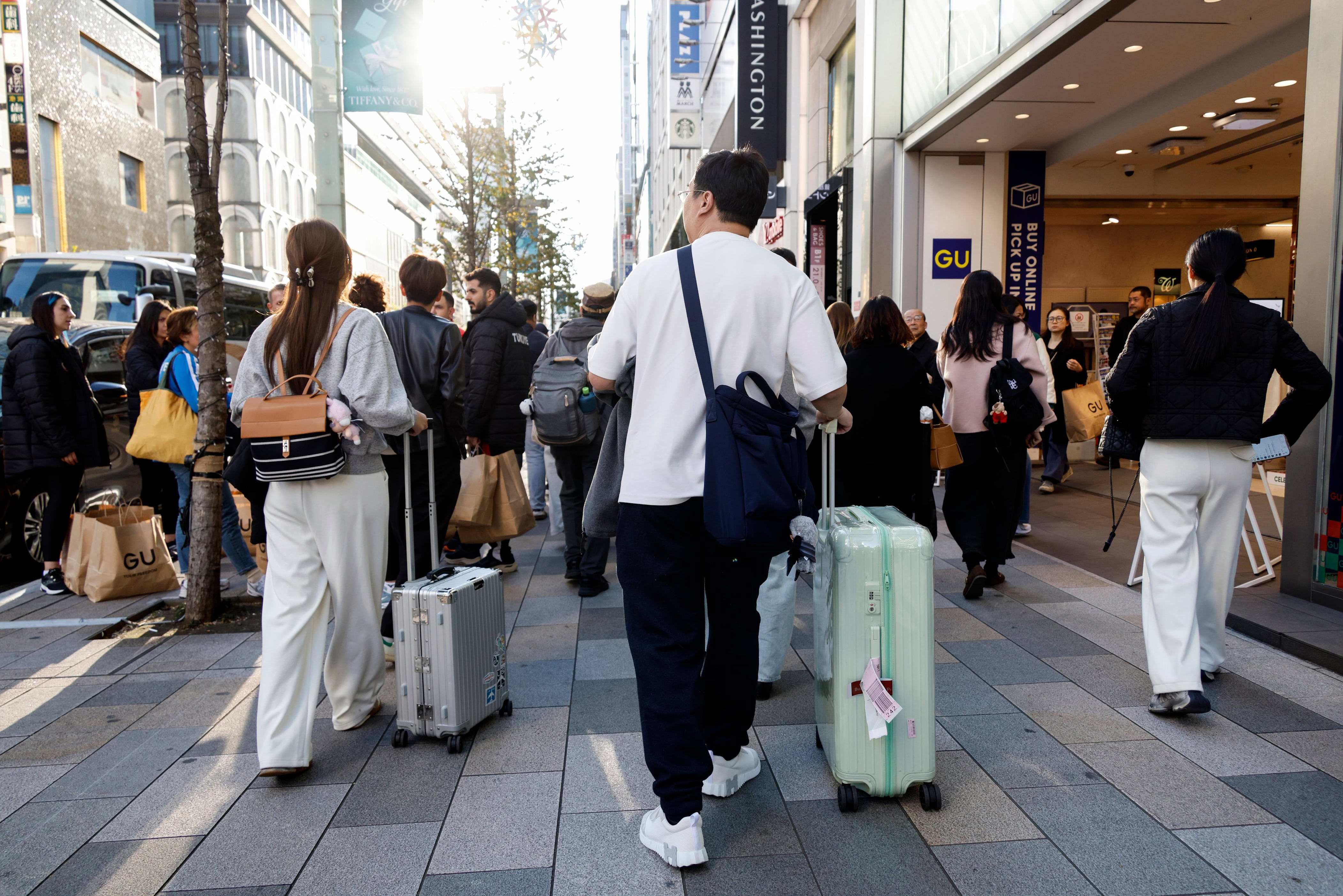
The Japanese government’s stated rationale for the increase is to address “overtourism” (overcrowding from an excess of tourists). It aims to impose costs related to waste management and congestion relief, which arise from an overabundance of tourists, on travelers themselves under the “polluter pays” principle. Starting next year, a family of four traveling to Tokyo would have to pay over 100,000 won solely in taxes.
Starting in 2028, an “entry fee”-type charge is also expected to be added. The Japanese government plans to introduce the “Japan Electronic System for Travel Authorization (JESTA),” requiring travelers from visa-exempt countries, such as South Korea, to submit personal information online and undergo screening before entry. Modeled after the U.S. ESTA system to prevent terrorism and illegal employment, the fee is under discussion at a range of 2,000–3,000 yen (approximately 18,000–27,000 Korean won). Consequently, from 2028 onward, travelers will be required to pay a combined total of approximately 5,000–6,000 yen (45,000–54,000 Korean won) per person in departure taxes and JESTA fees.

While the Japanese government plans to increase visa issuance fees fivefold next year, South Koreans will not be affected by this hike, as they are exempt from visas for short-term stays of up to 90 days for tourism purposes. However, tourists from countries requiring visas, such as China and Southeast Asian nations, will face significantly higher entry barriers.
Analysts attribute Japan’s across-the-board imposition of charges on tourists to severe fiscal difficulties. On the 27th, the Japanese Cabinet finalized the budget plan for the 2026 fiscal year at a record-high 122.31 trillion yen (approximately 1,076 trillion Korean won). Although Prime Minister Takahashi advocates for a “strong economy” and “strong security,” social security costs due to aging populations and defense expenditures are rising simultaneously. According to Japan’s Ministry of Finance, government bonds (national debt) issued to cover revenue shortfalls have nearly reached 30 trillion yen, with national debt standing at twice the GDP—making it the worst among G7 countries.